|
|
#11 |
|
⊙▃⊙
|
Daily Suspicious0bserver's Weather Post:
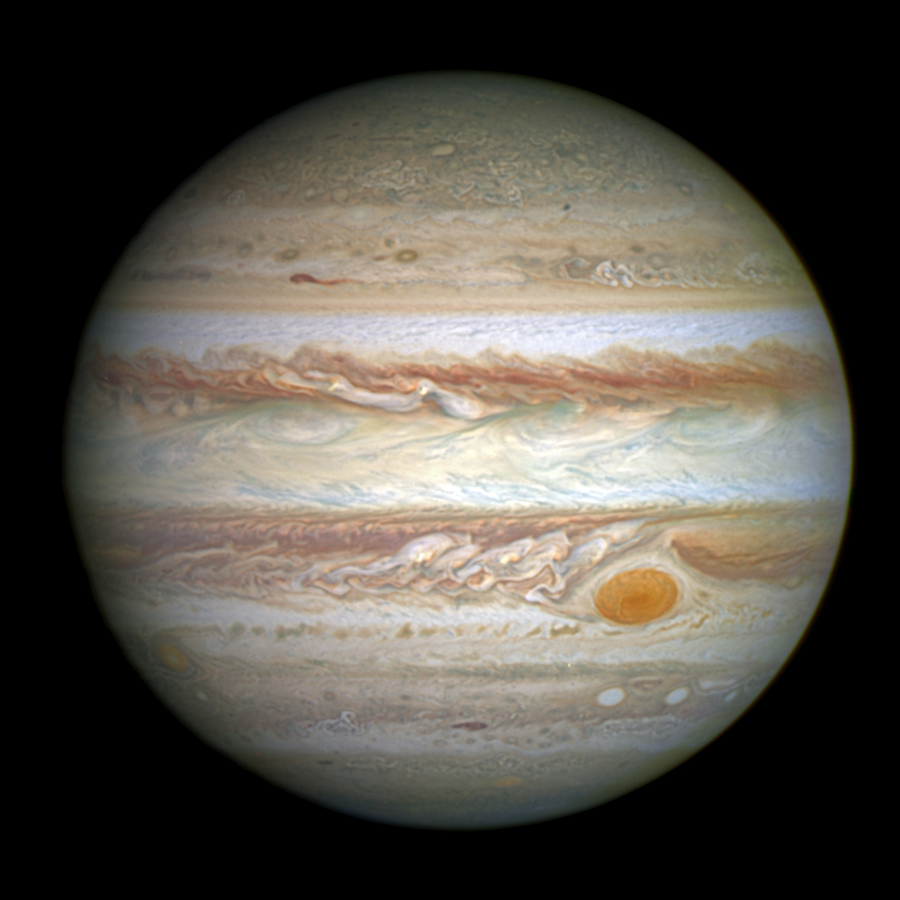
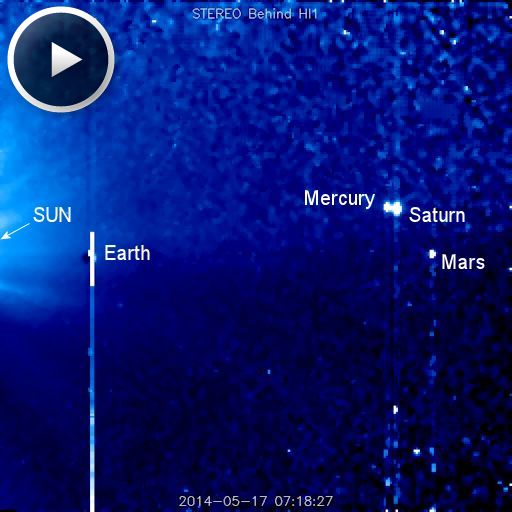
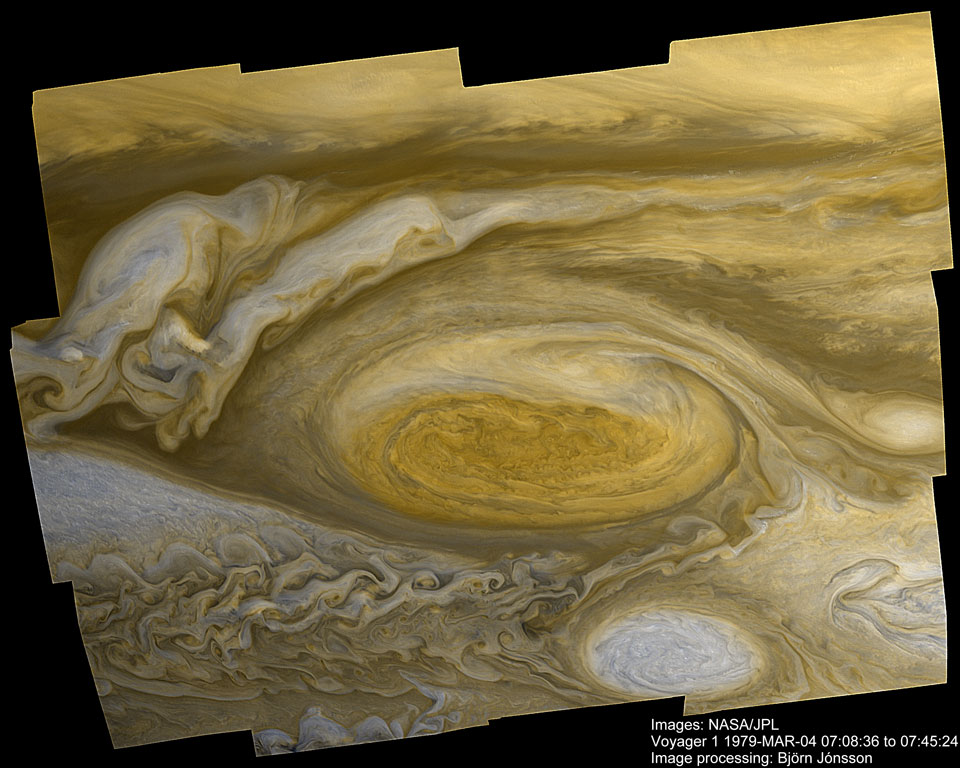
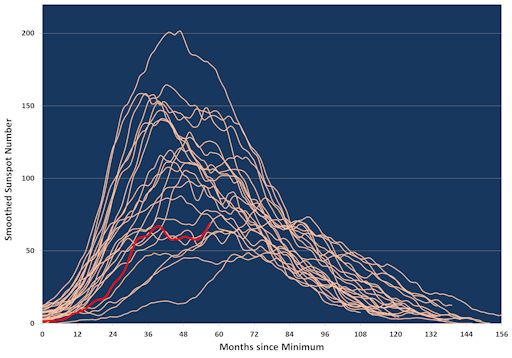
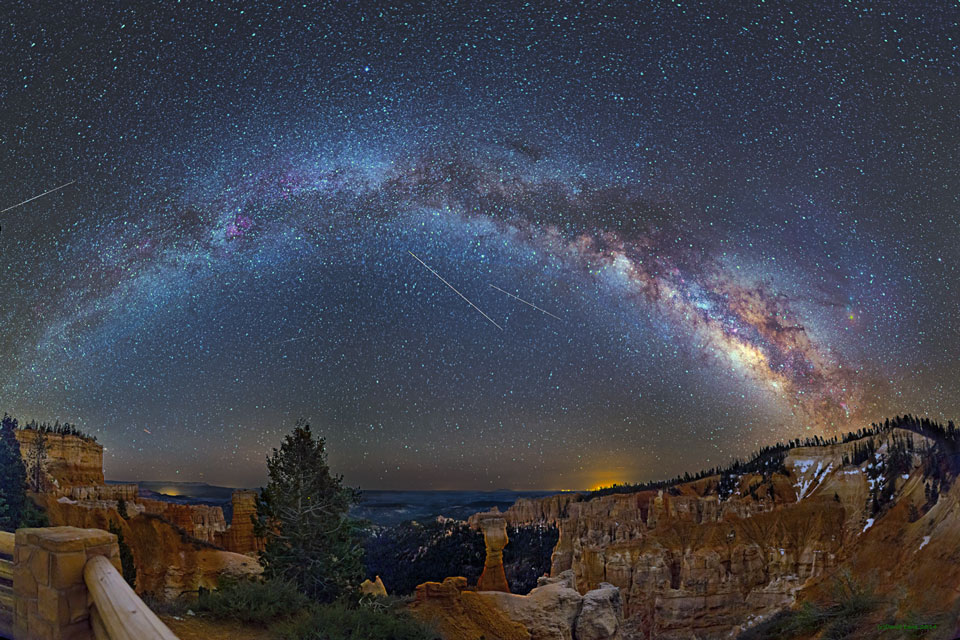
May 17, 2014 What's in the sky tonight? May 17, 2014 -Arcturus shines high in the southeast these nights. Vega shines much lower in the northeast. Look a third of the way from Arcturus to Vega for dim little Corona Borealis, the Northern Crown, with its one modestly bright star, Alphecca or Gemma. Two thirds of the way from Arcturus to Vega glimmers the dim Keystone of Hercules. Continue on down past Vega, and you hit Cygnus. Astro Picture of the Day: May 17, 2014 ![]() Gas giant Jupiter is the solar system's largest world with about 320 times the mass of planet Earth. It's also known for a giant swirling storm system, the Great Red Spot, featured in this sharp Hubble image from April 21. Nestled between Jupiter-girdling cloud bands, the Great Red Spot itself could still easily swallow Earth, but lately it has been shrinking. The most recent Hubble observations measure the spot to be about 10,250 miles (16,500 kilometers) across. That's the smallest ever measured by Hubble and particularly dramatic when compared to 14,500 miles measured by the Voyager 1 and 2 flybys in 1979, and historic telescopic observations from the 1800s indicating a width of about 25,500 miles on its long axis. Current indications are that the rate of shrinking is increasing for the long-lived Great Red Spot. Daily Suspicious0bserver's Weather Post: May 18, 2014 What's in the sky tonight? May 18, 2014 -Look south after dark for Mars at its highest. Straight below Mars, by more than a fist at arm's length, is the distinctive springtime constellation Corvus the Crow. Its four brightest stars form a distorted rectangle less than a fist in size. -Mercury and Saturn are in conjunction in the night sky. Just one problem: You have to be on the far side of the sun to see it. NASA's STEREO-B probe is perfectly positioned to observe the convergence. On Saturday, May 17th, the distance between the two planets was so narrow that they became nearly indistinguishable. If this event were visible from our side of the sun, it would surely be headline news. NASA's STEREO probes see many things that we cannot. From their orbits high above the farside of the sun, they track hidden sunspots, anti-Earth-directed solar flares, and interplanetary CMEs. STEREO's wide-field Heliospheric Imagers also have a unique view of the planets. See above. This weekend's conjunction of Mercury and Saturn is bracketed by Mars and Earth itself, an arrangement impossible to observe from terra firma. ![]() Astro Picture of the Day: May 18, 2014 ![]() What will become of Jupiter's Great Red Spot? Recorded as shrinking since the 1930s, the rate of the Great Red Spot's size appears to have accelerated just in the past few years. A hurricane larger than Earth, the Great Red Spot has been raging at least as long as telescopes could see it. Like most astronomical phenomena, the Great Red Spot was neither predicted nor immediately understood after its discovery. Although small eddies that feed into the storm system seem to play a role, a more full understanding of the gigantic storm cloud remains a topic of continued research, and may result in a better understanding of weather here on Earth. The above image is a digital enhancement of an image of Jupiter taken in 1979 by the Voyager 1 spacecraft as it zoomed by the Solar System's largest planet. NASA's Juno spacecraft is currently heading toward Jupiter and will arrive in 2016. Daily Suspicious0bserver's Weather Post: May 19, 2014 What's in the sky tonight? May 19, 2014 -Now that Vega is well up in the northeast in the evening, look to its lower left (by two or three fists) for Deneb. As Deneb rises higher through the night, a dark sky will reveal that it lies inside the Milky Way band looming up all across the eastern sky. -According to data from the NASA/French Space Agency Jason-2 satellite, something is brewing in the Pacific. Researchers say it could be a significant El Niņo with implications for global weather and climate. -Last month at the Space Weather Workshop in Boulder, Colorado, solar cycle expert Doug Biesecker of NOAA announced that "Solar Maximum is here, finally." According to his analysis, the sunspot number for Solar Cycle 24 is near its peak right now. Spoiler: It's not very impressive. "This solar cycle continues to rank among the weakest on record," says Workshop attendee Ron Turner of Analytic Services, Inc. To illustrate the point, he plotted the smoothed sunspot number of Cycle 24 vs. the previous 23 cycles since 1755. In the composite plot, Cycle 24 is traced in red. Only a few cycles since the 18th century have have had lower sunspot counts. For this reason, many researchers have started calling the ongoing peak a "Mini-Max." "By all Earth-based measures of geomagnetic and geoeffective solar activity, this cycle has been extremely quiet," notes Turner. "However, Doug Biesecker has presented several charts showing that most large events such as strong flares and significant geomagnetic storms occur in the declining phase of the solar cycle." In other words, there is still a chance for significant solar activity in the months and years ahead. ![]() Astro Picture of the Day: May 19, 2014 ![]() Sometimes land and sky are both busy and beautiful. The landscape pictured in the foreground encompasses Bryce Canyon in Utah, USA, famous for its many interesting rock structures eroded over millions of years. The skyscape above, photogenic in its own right, encompasses the arching central disk of our Milky Way Galaxy, streaks that include three passing airplanes and at least four Eta Aquariid meteors, and bright stars that include the Summer Triangle. The above image is a digital panorama created from 12 smaller images earlier this month on the night May 6. If you missed the recent Eta Aquariids meteor shower though, don't fret -- you may get an unexpected reprieve. Sky enthusiasts are waiting to see if a new meteor shower develops in the early morning hours of Saturday, May 24, when the Earth moves through a possibly dense cloud of dust and debris ejected by Comet 209P/LINEAR. Daily Suspicious0bserver's Weather Post: May 21, 2014 What's in the sky tonight? May 21, 2014 -The western twilight Arch of Spring is sinking, but you can still catch this big landmark when the stars come out. Jupiter in the west lies within it. Pollux and Castor, above Jupiter, are lined up roughly horizontally; they're the Arch's top. Look far to their lower left for Procyon, and farther to their lower right for Menkalinen and then bright Capella. Jupiter is moving closer to the Arch's upper-left side. -Anticipation is building as Earth approaches a cloud of debris from Comet 209P/LINEAR. This weekend, meteoroids hitting Earth's atmosphere could produce a never-before-seen shower called the "May Camelopardalids" peaking with as many as 200 meteors per hour. The best time to look is on Saturday, May 24th, between 0600 UT and 0800 UT (2 a.m. and 4 a.m. EDT). Earth won't be the only body passing through the debris zone. The Moon will be, too. Meteoroids hitting the lunar surface could produce explosions visible through backyard telescopes on Earth. The inset in this picture of an actual lunar meteor shows the region of the crescent Moon on May 24th that could be pelted by May Camelopardalids. According to NASA's Meteoroid Environment Office, the best time for amateur astronomers to scan the Moon for lunar meteors is after 0800 UT (4 a.m. EDT) on May 24th. There is much uncertainty about the strength of this shower, both on Earth and on the Moon. In recent history, our planet has never passed directly through a debris stream from Comet 209P/LINEAR, so no one knows exactly how much comet dust lies ahead. A magnificent meteor shower could erupt, with streaks of light in terrestrial skies and sparkling explosions on the Moon--or it could be a complete dud. ![]() Astro Picture of the Day: May 21, 2014 How do supercell storm clouds form? Pictured above is a time-lapse video taken last Sunday detailing the formation of one such violent supercell in eastern Wyoming, USA. Starting as part of a large and dark thunderstorm complex, the supercell comes together along with a large rotating updraft of air known as a mesocyclone. Mesocyclones form during rapid changes in wind speed and direction with height and can produce torrential rain, damaging hail, swirling winds, and sometimes tornadoes. Storm watchers are seen studying, imaging, and ultimately running from the developing storm cloud during the video. During the middle part of the video, the kilometer-wide supercell can be seen swirling ominously with a nearly flat bottom. Toward the end of the video, another swirling supercell cloud forms but then quickly dissipates.
__________________
1st in Kommisar's 2009 SM Tournament 1st in I Love You`s 2009 New Year`s Tournament 3rd in EnR's Mashfest '08 tournament 5th in Phynx's Unofficial FFR Tournament 9th in D3 of the 2008-2009 4th Official FFR Tournament 10th in D5 of the 2010 5th Official FFR Tournament 10th in D6 of the 2011-2012 6th Official FFR Tournament FMO AAA Count: 71 FGO AAA Count: 10 Bluearrowll = The Canadian player who can not detect awkward patterns. If it's awkward for most people, it's normal for Terry. If the file is difficult but super straight forward, he has issues. If he's AAAing a FGO but then heard that his favorite Hockey team was losing by a point, Hockey > FFR PS: Cool AAA's Terry - I Love You An Alarm Clock's Haiku beep beep beep beep beep beep beep beep beep beep beep beep beep beep beep beep beep - ieatyourlvllol |
|
|
|
| Currently Active Users Viewing This Thread: 1 (0 members and 1 guests) | |
|
|