|
|
#11 |
|
⊙▃⊙
|
What's in the sky tonight?
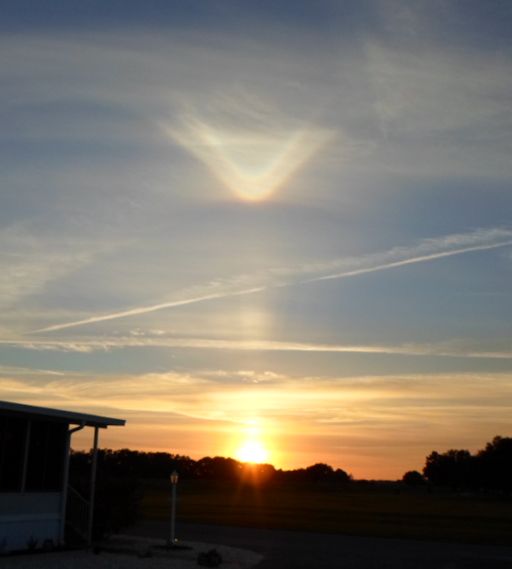
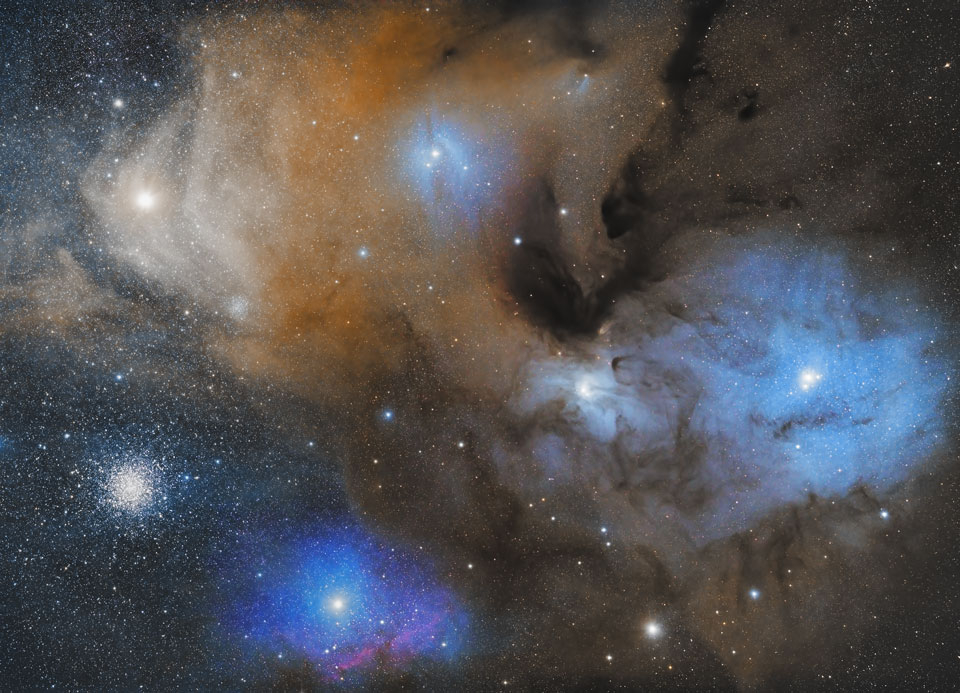
December 3, 2013 -With no sunspots actively flaring, the Earthside of the sun is quiet. However, two sunspots (AR1908 and AR1909) have 'beta-gamma' magnetic fields that harbor energy for moderately strong eruptions. NOAA forecasters estimate a 25% chance of M-class solar flares on Dec. 3rd. -The Summer Triangle is still high after dusk in December. Spot Vega, its brightest star, in the west-northwest. The brightest above Vega is Deneb. Look farther to Vega's right for Altair. -At the end of American Thanksgiving Day when the sun was setting over Sumterville, Florida, Paula Phillips took a break from her meal, stepped outside and saw something odd-a pair of luminous 'Vs' in the deepening twilight. "I've never seen anything like this before," says Phillips. "I photographed the phenomenon with a simple small Samsung camera." They're sun halos, caused by sunlight shining through ice crystals. Atmospheric optics expert Les Cowley explains: "These two ‘V’ shaped halos, one rare and one common, change shape dramatically as the sun climbs," he says. "Near sunrise or sunset is the only time to catch them like this. The lower ‘V’ is an upper tangent arc from horizontal hexagonal prisms of ice. The upper one is a rare sunvex Parry arc from similar crystals that - strangely – are fixed so that two prism faces are always horizontal. In the full-sized image, we also see just a trace of a 22o halo and stretching upwards from the sun a sun pillar." "I find it odd that I saw this in Florida!" continues Phillips. Yet Florida has ice crystal, too. The atmosphere 5 to 10 km above the Sunshine State is always cold enough for water to freeze. "Florida and other warm places get plenty of halos-some of them exceedingly rare," says Cowley. "Look for them everywhere, winter and summer." ![]() Astro Picture of the Day: December 3, 2013 ![]() The many spectacular colors of the Rho Ophiuchi (oh'-fee-yu-kee) clouds highlight the many processes that occur there. The blue regions shine primarily by reflected light. Blue light from the star Rho Ophiuchi and nearby stars reflects more efficiently off this portion of the nebula than red light. The Earth's daytime sky appears blue for the same reason. The red and yellow regions shine primarily because of emission from the nebula's atomic and molecular gas. Light from nearby blue stars - more energetic than the bright star Antares - knocks electrons away from the gas, which then shines when the electrons recombine with the gas. The dark brown regions are caused by dust grains - born in young stellar atmospheres - which effectively block light emitted behind them. The Rho Ophiuchi star clouds, well in front of the globular cluster M4 visible above on lower left, are even more colorful than humans can see - the clouds emits light in every wavelength band from the radio to the gamma-ray.
__________________
1st in Kommisar's 2009 SM Tournament 1st in I Love You`s 2009 New Year`s Tournament 3rd in EnR's Mashfest '08 tournament 5th in Phynx's Unofficial FFR Tournament 9th in D3 of the 2008-2009 4th Official FFR Tournament 10th in D5 of the 2010 5th Official FFR Tournament 10th in D6 of the 2011-2012 6th Official FFR Tournament FMO AAA Count: 71 FGO AAA Count: 10 Bluearrowll = The Canadian player who can not detect awkward patterns. If it's awkward for most people, it's normal for Terry. If the file is difficult but super straight forward, he has issues. If he's AAAing a FGO but then heard that his favorite Hockey team was losing by a point, Hockey > FFR PS: Cool AAA's Terry - I Love You An Alarm Clock's Haiku beep beep beep beep beep beep beep beep beep beep beep beep beep beep beep beep beep - ieatyourlvllol |
|
|
|
| Currently Active Users Viewing This Thread: 1 (0 members and 1 guests) | |
|
|