

While relatively unknown because it is not known for it's output, this year is supposed to be a surprisingly vibrant meteor shower. The peak is the 8th of october around 5pm EST - 10pm GMT, thus favourable to the Europeans!
The Draconid constellation is north west of the big dipper - look towards the ceiling of the sky to see the meteorites shoot from their origin! (The Draconid constellation)
However, there will be some meteors to be seen even for the americans as well. I did some testing tonight with my night photography set up to see what I could accomplish.
My goal is to capture at least one meteorite on camera.
Here are some photos I conjured up tonight:
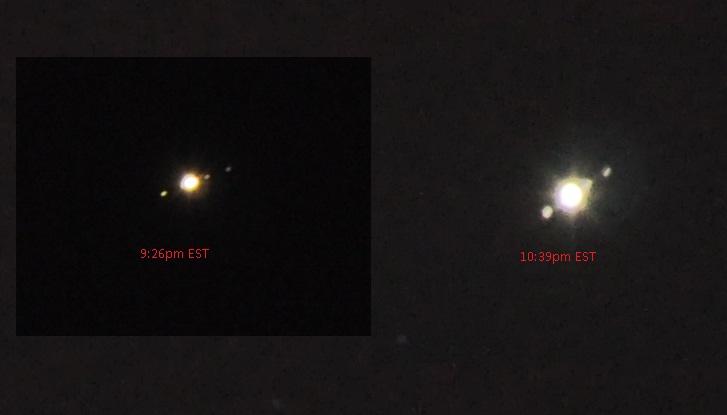
Jupiter + Moons over a couple hours.
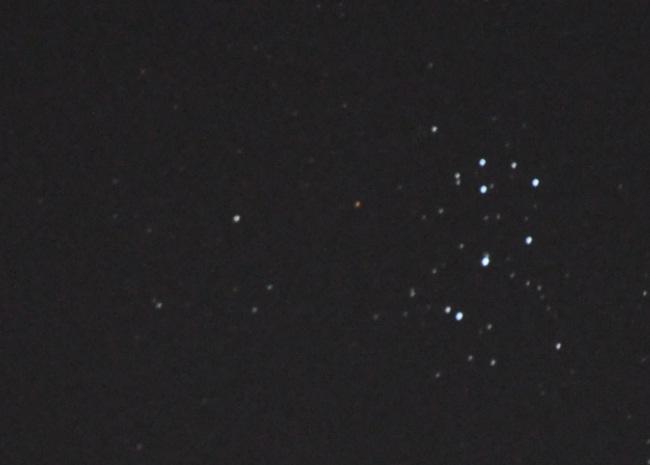
Pleiades, M45
Andromeda Galaxy, M31 (found in Andromeda constellation)
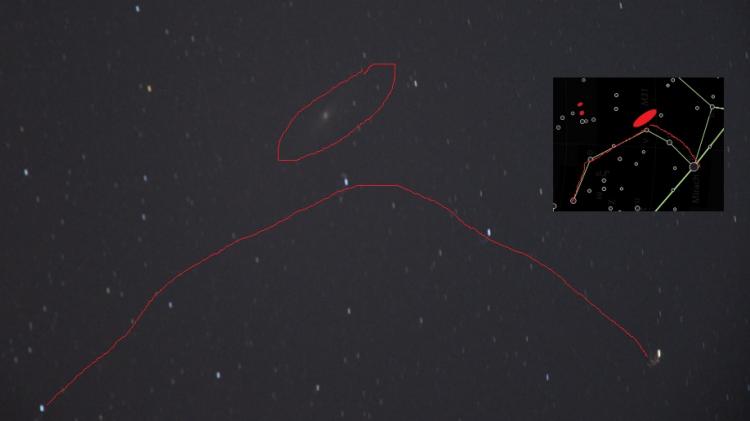
If it can capture magnitude 3.4 Andromeda Galaxy, then there's no reason why it can't capture magnitude -2 meteorites. Anyone else who wants to see this on a clear night is more than welcome to!
For the North Americans, the moment it gets dark, grab a chair and look up.
The Draconid constellation is north west of the big dipper - look towards the ceiling of the sky to see the meteorites shoot from their origin! (The Draconid constellation)
However, there will be some meteors to be seen even for the americans as well. I did some testing tonight with my night photography set up to see what I could accomplish.
My goal is to capture at least one meteorite on camera.
Here are some photos I conjured up tonight:
Jupiter + Moons over a couple hours.
Pleiades, M45
Andromeda Galaxy, M31 (found in Andromeda constellation)
If it can capture magnitude 3.4 Andromeda Galaxy, then there's no reason why it can't capture magnitude -2 meteorites. Anyone else who wants to see this on a clear night is more than welcome to!
For the North Americans, the moment it gets dark, grab a chair and look up.


 Definitely will try to catch it.


Comment