 05-3-2014, 10:08 AM
|
#925
|
|
⊙▃⊙
  
Join Date: Nov 2007
Location: I live in the last place where you Look.
Age: 33
Posts: 7,376
|
 Re: Terry's Astronomy Thread.
Daily Suspicious0bserver's Weather Post:
May 3, 2014
What's in the sky tonight?
May 3, 2014
-The waxing crescent Moon shines below Jupiter in the west at dusk. Above Jupiter are Pollux and Castor.
-New sunspot AR2051 is growing rapidly and has developed a 'delta-class' magnetic field that harbors energy for X-class solar flares. Any explosions this weekend would likely be geoeffective as the sunspot is approximately facing Earth.
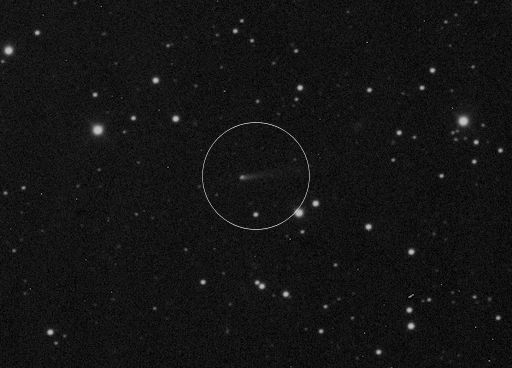
-On May 24th, Earth will pass through a cloud of debris from periodic comet 209P/LINEAR. The result could be a new meteor shower. Forecasters expect meteor rates as high as 200 per hour when Earth crosses the debris zone. There has even been talk of a possible meteor storm. These are lofty predictions for a comet that looks so puny. "This image was taken on April 30th (4:35 UTC) using our 20-inch telescope located in New Mexico," says Bill Cooke of NASA's Meteoroid Environment Office. "A 3 minute exposure, it shows 14th magnitude Comet 209P/LINEAR shining faintly among the stars of Ursa Major. At the time of this image, 209P was just over 40 million km from Earth, heading for a relatively close approach (8.3 million km) with us on May 29th."
The comet is faint because it is a poor producer of dust. How, then, could it create a debris cloud capable of triggering a fine meteor shower? The answer is in the timing. The debris we are about to hit was shed by the comet not in 2014 but rather in the 1800s, when forecasters think the comet was probably more active.
The best place to see the display is North America where it will be nighttime during the shower's peak. Meteors will emerge from a radiant point high in the sky, in the constellation Camelopardalis not far from the North Star. Peak rates are expected between 6:00 and 08:00 UT or 2 and 4 o'clock in the morning EDT on May 24th. No one can say for sure how strong this new shower will be; possibilities range from "storm" to "dud." Stay tuned for updates as the debris zone approaches.
 Astro Picture of the Day:
May 3, 2014
Source:
Astro Picture of the Day:
May 3, 2014
Source:
The yellowish star near center in this dusty telescopic skyview is T Tauri, prototype of the class of T Tauri variable stars. Just next door is the yellow cosmic cloud historically known as Hind's Variable Nebula (NGC 1555). Over 400 light-years away, at the edge of an otherwise invisible molecular cloud, both star and nebula are seen to vary significantly in brightness but not necessarily at the same time, adding to the mystery of the intriguing region. T Tauri stars are now generally recognized as young (less than a few million years old), sun-like stars still in the early stages of formation. To further complicate the picture, infrared observations indicate that T Tauri itself is part of a multiple system and suggest that the associated Hind's Nebula may also contain a very young stellar object. The naturally colored image spans about 7 light-years at the estimated distance of T Tauri.
|

|

|