What's in the sky tonight?
November 27, 2013
-The Earthside of the sun is quiet. NOAA forecasters estimate a slim 1% chance of either M- or X-class solar flares on Nov. 27th. However, there is at least one active region on the farside of the sun which could target Comet ISON when it swings around the farside after Nov. 28th.
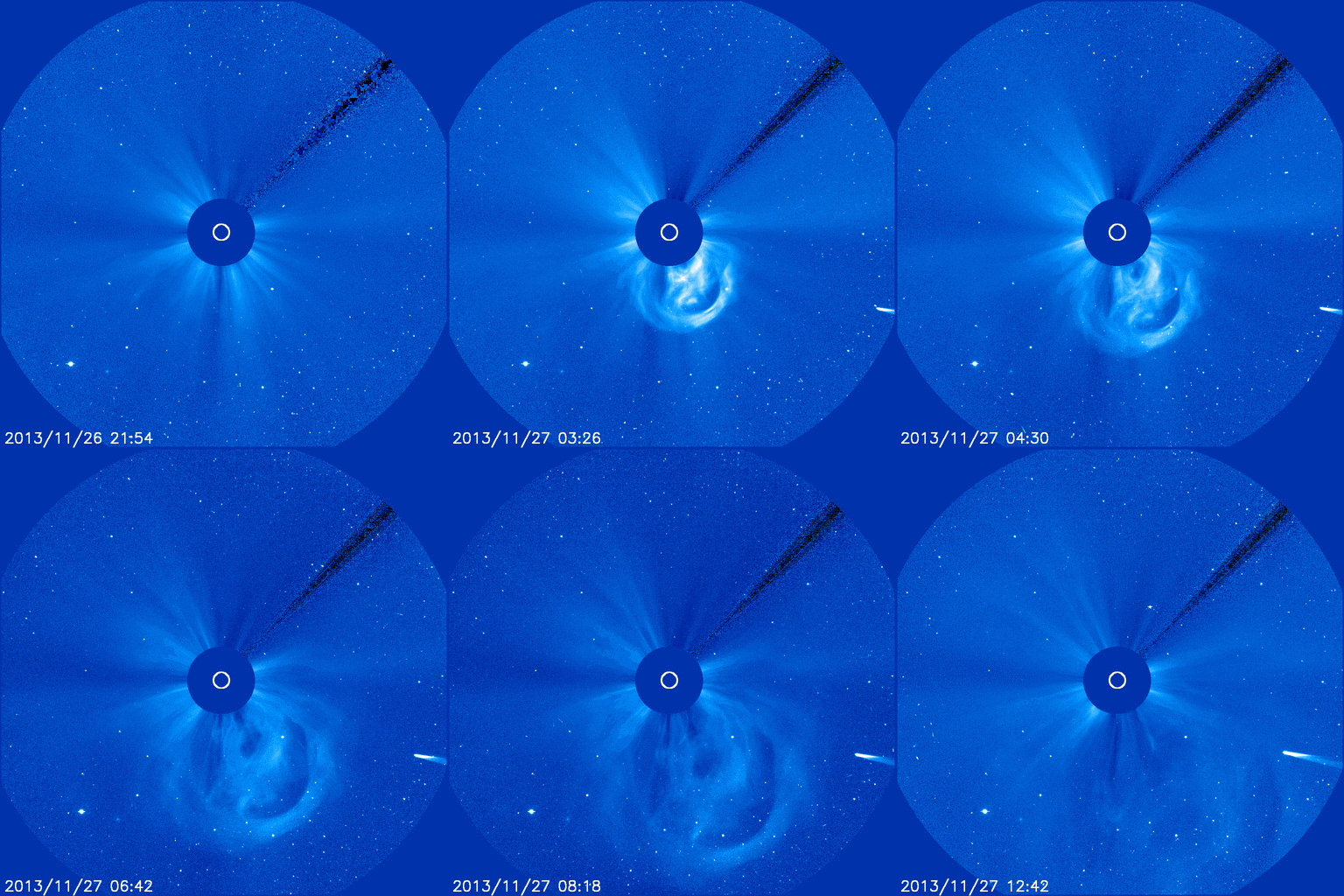
-Comet ISON is hurtling toward the sun today at 240,000 mph and, despite the rising heat, the comet appears to be intact. Yesterday, reports of fading spectral lines from the comet's core raised concerns that the icy nucleus might be disintegrating. Current images from NASA and ESA spacecraft, however, show the comet still going strong. Comet ISON has just entered the field of view of the Solar and Heliospheric Observatory (SOHO).
-The comet's entrance coincides with a bright CME racing away from the sun's southwestern limb. Astronomers have been wondering what might happen if a CME strikes Comet ISON. This CME, however, will probably miss. The source of the cloud is a farside active region, which is not directly facing the comet.
-Astronomer Karl Battams of NASA's Comet ISON Observing Campaign urges readers to remember the following: "Comet ISON is a dynamically new sungrazing comet, fresh in from the Oort Cloud, and the last time we saw an object like this was never! Furthermore, a sungrazing comet just days from perihelion has never been studied in this kind of detail - we're breaking new ground! When we factor in your standard 'comets are unpredictable' disclaimer, what we have is a huge recipe for the unknown."
Significant ISON Satellite Dates:
• Nov. 21–28: STEREO-A, Heliospheric Imager.
• Nov. 26–29: STEREO-B, coronagraphs. Stereo-B will be the only craft to watch ISON transit the face of the Sun.
• Nov. 27–30: SOHO, coronagraphs.
• Nov. 28–29: STEREO-A, coronagraphs.
• Nov. 28: Solar Dynamics Observatory (SDO); for about 3 hours around perihelion.
• Nov. 28: Japan's Hinode, X-Ray Telescope; for about 55 minutes around perihelion.
Astro Picture of the Day:
November 27, 2013
Source:
Will Comet ISON survive tomorrow's close encounter with the Sun? Approaching to within a solar diameter of the Sun's surface, the fate of one of the most unusual comets of modern times will finally be determined. The comet could shed a great amount of ice and dust into a developing tail - or break apart completely. Unfortunately, the closer Comet ISON gets to the Sun, the harder it has been for conventional telescopes to see the brightening comet in the glare of the morning Sun. Pictured in the above short time lapse video, Comet ISON was captured rising over the Canary Islands just above the morning Sun a few days ago. If the comet's nucleus survives, the coma and the tails it sheds might well be visible rising ahead of the Sun in the next few days or weeks. Alternatively, satellites watching the Sun might document one of the larger comet disintegrations yet recorded. Stay tuned!