 11-10-2013, 08:32 AM
|
#12
|
|
⊙▃⊙
  
Join Date: Nov 2007
Location: I live in the last place where you Look.
Age: 33
Posts: 7,376
|
 Re: Terry's Astronomy Thread.
What's in the sky tonight?
November 10, 2013
-Cassiopeia shines high in the northeast in early evening, with its five-star W pattern standing on end. Look far below it for Capella rising. Far right of Capella is the little Pleiades cluster, with Aldebaran down below it.
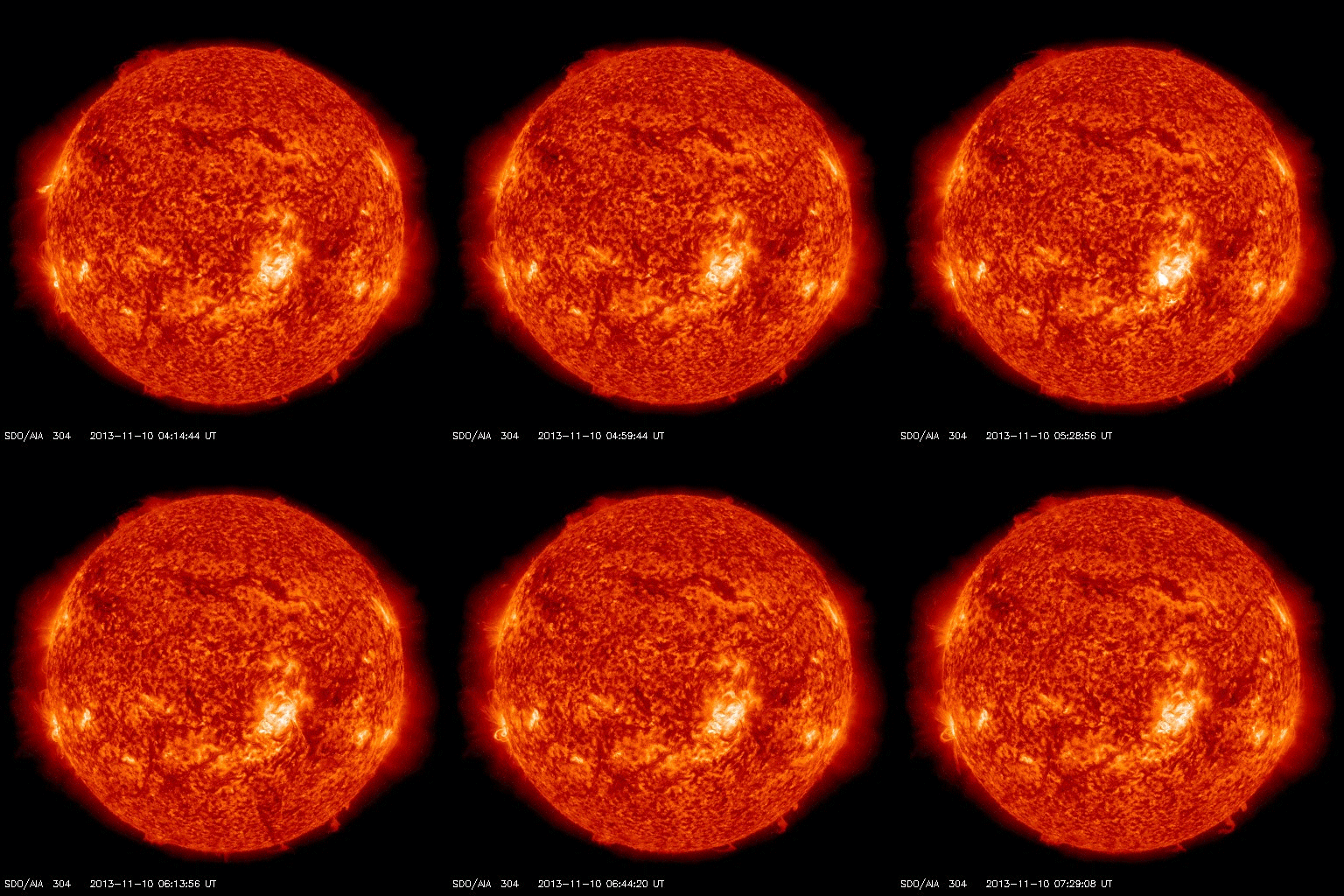
-sunspot AR1890 has unleashed another strong flare, an X1-class explosion on Nov. 10th at 05:14 UT. NASA's Solar Dynamics Observatory recorded a bright flash of extreme ultraviolet radiation from the blast site. This is the third X-flare from AR1890 since Nov. 5th, and all three have something in common: brevity. AR1890 tends to produce impulsive flares, peaking sharply in a matter of minutes or less. Often, brief flares do not produce coronal mass ejections (CMEs), but this one could be an exception. A movie of the flare shows a plume of material lifting off the sun shortly after the UV flash. That could be the beginnings of an Earth-directed CME.
 Astro Picture of the Day:
November 10, 2013
Source:
Astro Picture of the Day:
November 10, 2013
Source:
Sometimes the sky itself is the best show in town. In January 2007, people from Perth, Australia gathered on a local beach to watch a sky light up with delights near and far. Nearby, fireworks exploded as part of Australia Day celebrations. On the far right, lightning from a thunderstorm flashed in the distance. Near the image center, though, seen through clouds, was the most unusual sight of all: Comet McNaught. The photogenic comet was so bright that it even remained visible though the din of Earthly flashes. Comet McNaught has now returned to the outer Solar System and is now only visible with a large telescope. The above image is actually a three photograph panorama digitally processed to reduce red reflections from the exploding firework.
|

|

|